
PESCO Peak Hours 2026 – Timing Schedule & How They Affect your Electricity Bill
Electricity Peak hours are the evening hours of the day, when electricity demand usually reaches its peak. During these hours the use of heavy electrical appliances like air conditioners, iron, and electric geezers is maximum, thus maximizing the electricity consumption. during these hours electricity is charged at a higher per-unit rate. It is important to understand the PESCO peak hours schedule to manage the usage of electricity more efficiently and reducing its impact on electricity bill. It is also important to note that peak hours are applicable to three phase meters only. If you want to quickly check your latest bill and peak hours consumption, visit our PESCO Online Bill page
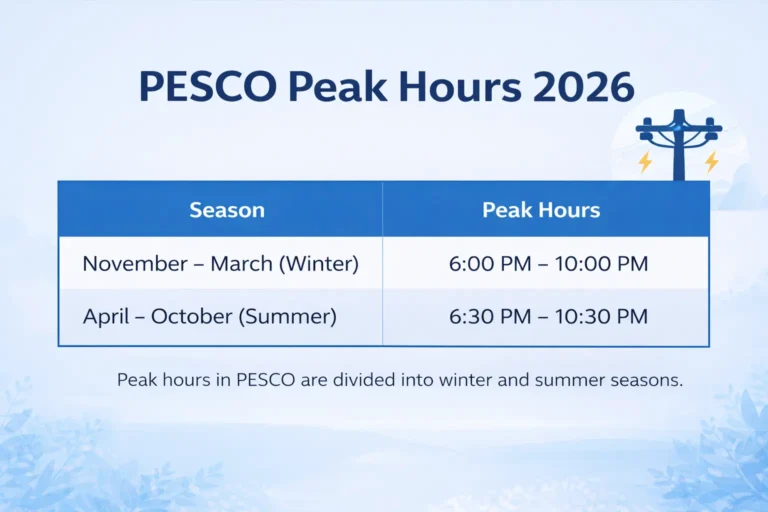
How Peak Hours Affect Your Electricity Bill
During peak hours, electricity demand is usually at its peak. Electricity distribution companies apply higher per unit charges on electricity consumption during these hours, in order to control consumption. To understand electricity unit rates and slab pricing, you can check our PESCO Tariff & Units guide. The peak hours’ formula is applicable to Three-phase Time of use (ToU) meters as defined under NEPRA electricity regulations. These meters have the capacity to record peak and off-peak hours separately.
Usage of heavy electrical appliances during these hours may result in increase in the electricity bill. It is important to understand the role of PESCO peak hours in your electricity bill. Shifting the use of heavy electrical appliances to off-peak hours can effectively reduce your electricity bill.
Which Electricity Meters are Affected by Peak Hours
Peak hour electricity rates are not uniformly applicable to all consumers. Most domestic consumers use single-phase meters, and their billing is based on a slab-based billing system instead of peak hours. In the slab-based system, the total number of electricity units consumed determines the electricity bill, not the time of use.
The peak hours system is mainly applied to three-phase Time of Use (ToU) meters. Apart from this, solar on-grid meters are also three-phase in nature and fall under the peak hours category. These meters keep a record of electricity consumption during peak and off-peak hours, allowing electricity supply companies to apply a higher per-unit rate on peak hours consumption.
Electrical appliances to Avoid During Peak Hours
If heavy electric appliances are used during peak hours, there is a possibility of higher electricity bills due to the higher cost of electricity during these hours. These heavy electric appliances include air conditioners, electric geysers, electric irons & heaters and washing machines.
To keep a check on your electricity bill, you should avoid using these appliances during PESCO peak hours. We recommend you to use of these appliances mainly during off-peak hours. This precaution will keep your bill within affordable range.
Tips to Reduce Electricity Usage During Peak Hours
Following are a few practical tips to keep your electricity bill under control:
- Avoid use of multiple heavy electrical appliances at the same time during peak hours.
- To reduce electricity consumption modern energy efficient appliances can be used such as inverter air conditioners and LED bulbs.
- Use moderate temperature settings while using air conditioners and electric heaters.
- If possible, switch use of appliances like washing machines and electric iron to off-peak hours.
- Turn off extra lights and appliances when not in use.
You can also estimate your electricity bill using our PESCO Bill Calculator.
Frequently Asked Questions
What are PESCO peak hours?
PESCO peak hours are specific evening hours when electricity demand is highest. During these hours, electricity consumed through three-phase Time of Use (ToU) meters is charged at a higher per-unit rate.
How can I reduce my electricity bill during PESCO peak hours?
You can reduce your electricity bill by avoiding the use of heavy electrical appliances such as air conditioners, electric geysers, irons, and washing machines during peak hours and shifting their usage to off-peak hours.
Do peak hours apply to single-phase meters?
No. Most residential consumers in Pakistan use single-phase meters, which follow a slab-based billing system. In this system, electricity charges depend on total monthly consumption rather than the time of usage.
One Comment
Comments are closed.