Save Electricity – 10 Proven Ways to Reduce Bill
Electricity bills in Pakistan have increased significantly in recent years, primarily due to rising tariffs and fuel adjustments. This has made it difficult for the public to afford these costs and it has become very important to know how to save electricity, more than ever before. This page is a complete guide for you, showing you ten useful ways to save electricity in Pakistan.
No matter where you live in Pakistan, you can benefit from it. The good news is that you don’t have to make any major changes to save on electricity; rather, with small changes in your habits and life style you can reduce electricity cost significantly.
How to Save Electricity
Here are 10 practical ways to save electricity in Pakistan — things that actually work for real households.
1. Avoid Using Appliances During Peak Hours
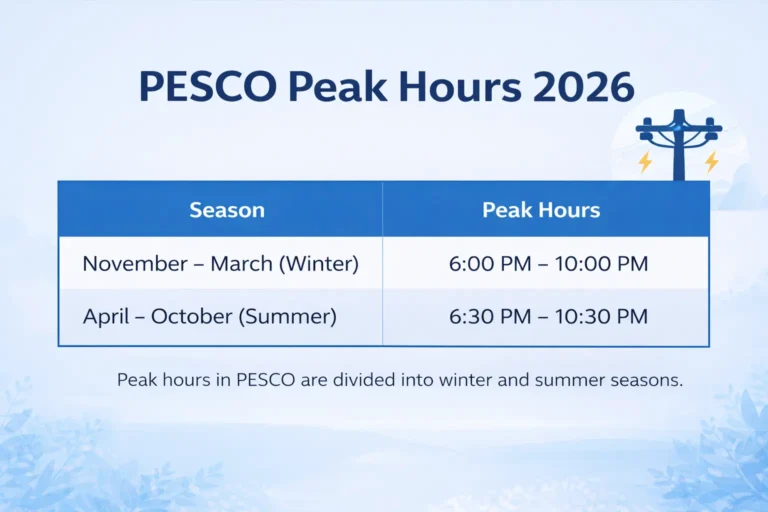
This one tip alone can make a visible difference on your next PESCO bill. Every evening between 6 PM to 10PM, electricity demand across Pakistan surges as millions of households come home, switch on lights, fire up the AC, and start cooking. The grid is under its heaviest load during this window.
Running your washing machine or electric iron during these hours is essentially paying a premium for the same electricity you could use cheaper at midnight or early morning. Try shifting laundry to after 10 PM or before 7 AM. It sounds like a small thing, but if you do it consistently, the savings add up fast.
To check when your region’s peak hours apply, visit PESCO Peak Hours for the current schedule.
2. Switch to LED Bulbs
Walk through any older home in Pakistan and you will still find yellow incandescent bulb or first-generation energy savers hanging from the ceiling. These bulbs are quietly draining your bill every single day. A standard 60W incandescent bulb does the same job as a 9W LED — and the LED lasts years longer.
Consider a family with 12 bulbs running an average of 6 hours a day. Switching all of them to LED can save roughly 300–400 units of electricity over a year. At current domestic tariffs, that is a meaningful amount in rupees.
The bulbs cost more upfront, but most households recover the difference within two to three billing cycles. After that, it is pure saving.
3. Use Energy-Efficient Appliances
Old appliances are silent budget-busters. A refrigerator from 10 years ago can consume nearly twice the electricity of a modern inverter-based model. The same goes for air conditioners — a conventional fixed-speed AC running through a Karachi or Lahore summer will push your bill into painful territory.
Inverter ACs regulate compressor speed based on how much cooling is actually needed, rather than switching on and off at full power repeatedly. The difference in consumption is significant — many users report drops of 30–40% in their electricity bill Pakistan after switching.
Energy saver fans are another good investment, especially in Punjab and KPK where fans run almost year-round. They draw 30–50W less than standard ceiling fans and most people cannot feel any difference in airflow.
4. Turn Off Standby Devices
This is the one people consistently underestimate. Your television set, microwave, Wi-Fi router, laptop charger, and LED strip remote controller — they all draw small amounts of power continuously when left plugged in. Alone, each one seems harmless. Together, across a full month, they add a noticeable chunk to your bill.
Get into the habit of switching off plugs at the socket, not just turning off the device. A simple power strip in your TV lounge makes this easier — one switch cuts everything at once. It takes about two seconds before you go to bed.
This habit costs nothing and has no downside.
5. Reduce Air Conditioner Usage
The AC is almost always the single biggest item on a summer electricity bill in Pakistan. But the way most people use it leaves a lot of room for savings. Setting the thermostat to 18°C or 20°C when 26°C is perfectly comfortable is one of the most common and expensive mistakes.
Raising the set temperature from 20°C to 26°C can cut AC power consumption by 20–30%, depending on the unit. Pair that with a ceiling fan running on medium speed, and the room feels just as cool. The fan uses far less electricity than the AC working overtime.
Also clean your AC filter every two to three weeks. A blocked filter forces the unit to pull harder and use more power. It is a five-minute job that most people skip until the AC starts dripping or blowing warm air.
6. Use Natural Light and Ventilation
Pakistan is one of the sunniest countries in the world, yet many homes keep their curtains drawn and lights on during the day out of habit. On a clear morning in Peshawar, Multan, or Hyderabad, there is more than enough natural light to work, cook, or study by — without switching on a single bulb.
Start your day with open windows and pulled-back curtains. If your kitchen faces east, morning cooking needs no lights at all. It is a simple shift in routine that cuts down artificial lighting hours significantly.
On slightly cooler days — spring and autumn mornings especially — cross-ventilation through open windows can keep rooms comfortable without any fan or AC. Open windows on opposite sides of a room and let the breeze do the work.
7. Install Solar Panels
Solar is no longer just for wealthy households or commercial buildings. Prices for panels have dropped considerably in recent years, and Pakistan’s net metering policy allows you to export surplus electricity back to the grid, reducing your PESCO bill — or in some cases, eliminating it during sunny months.
A basic 3 kW system is suitable for a small home with two or three fans, basic lighting, and a refrigerator. Installed cost typically ranges from PKR 350,000 to PKR 550,000 depending on the vendor and battery configuration. Most households recover this in three to five years through bill savings.
This is a longer-term strategy, but if you own your home and plan to stay, solar is one of the most effective ways to permanently reduce electricity costs.
8. Iron Clothes in Bulk
An electric iron takes about two to three minutes to heat up fully from cold. If you iron two shirts Monday morning, three on Wednesday, and a few more over the weekend, you are running that heating cycle multiple times unnecessarily.
Batch your ironing into one weekly session. Get everything done in one sitting outside peak hours — say, a Saturday morning. The iron heats up once, stays hot throughout the session, and you use far less electricity overall than if you had done it piecemeal across the week.
It also just takes less total time, which is a bonus.
9. Maintain Electrical Appliances
A poorly maintained appliance always uses more electricity than it should. The most common example in Pakistani homes is the refrigerator. If the rubber door seal is worn or cracked, cold air leaks out constantly and the compressor runs almost non-stop to compensate. That one fault can add 20–40 units to your monthly consumption without you noticing.
A few maintenance habits to build:
– Refrigerator: Check door seals every few months. Keep the back coils dust-free.
– Air conditioner: Service it before the start of summer every year. Clean filters regularly.
– Fans: Oil the motor bearings annually so the fan runs efficiently and quietly.
– Wiring: Loose connections create resistance, generate heat, and waste electricity. Have your home’s wiring checked by a qualified electrician every few years.
None of these take much time or money, but they make a real difference.
10. Monitor Your Electricity Usage Regularly
Most households only look at their electricity bill when it arrives — and by then, a month of high consumption has already happened. Checking your usage mid-month gives you a chance to correct course before the damage is done.
Use the PESCO Bill Calculator to estimate your charges based on units consumed. If you notice your reading climbing faster than usual, check which appliance changed — did a family member start working from home, or did the kids come back from hostel? Small lifestyle shifts show up clearly in the units.
You can also Check PESCO Online Bill at any time to review your current meter reading, billing history, and previous consumption — without standing in any queue.
Electricity tariffs in Pakistan are regulated by NEPRA (National Electric Power Regulatory Authority), which sets the official unit rates and policies.
How to Save Electricity in Pakistan (Estimated Monthly Savings)
Let’s take a realistic example. A typical family in an urban area of KPK or Punjab consuming around 500 units per month could see the following monthly savings by making a few of these changes:
| Change Made | Estimated Monthly Saving |
|---|---|
| Switching 10 bulbs to LED | PKR 300 – 500 |
| Setting AC to 26°C instead of 20°C | PKR 800 – 1,200 |
| Avoiding peak hour appliance use | PKR 400 – 700 |
| Turning off standby plugs | PKR 150 – 300 |
| Ironing clothes in bulk sessions | PKR 100 – 200 |
| Total Estimated Saving | PKR 1,750 – 2,900 / month |
That adds up to roughly PKR 21,000 – 35,000 per year — from habit changes alone, with no major purchase. Households with a large inverter AC or higher baseline consumption can save considerably more.
Frequently Asked Questions
How to reduce electricity bill in Pakistan?
Start with the basics: switch to LED bulbs, avoid heavy appliance use between 6 and 10 PM, and set your AC to 26°C. These three changes alone can reduce your electricity bill Pakistan noticeably within the first month. Use the PESCO Bill Calculator to track how changes in usage affect your charges.
What are peak hours in Pakistan?
Peak hours are generally from 6 PM to 10 PM, when demand on the grid is at its highest. Running washing machines, irons, or air conditioners during this window increases your load during the most congested period. Check PESCO Peak Hours to confirm the current schedule in your district.
Does inverter AC save electricity?
Yes, significantly. A conventional AC compressor runs at full power and cycles on and off based on temperature. An inverter AC runs continuously but adjusts its speed and power draw to match exactly what the room needs — which ends up being far more efficient. Most users see a 30–50% reduction in AC-related electricity costs after switching.
How to reduce PESCO bill?
The fastest wins are behavioral: avoid peak hours, reduce AC temperature settings, and unplug standby devices. For bigger long-term reductions, consider switching to energy-efficient appliances and eventually looking at solar. You can Check PESCO Online Bill monthly to track your consumption trends and catch unusual spikes early.
Conclusion
Rising electricity bills are a shared problem across Pakistan right now, but you are not completely at the mercy of the tariff structure. There is a lot within your control.
Pick two or three changes from this list and start this week. Check your PESCO Bill Calculator estimate after a month. You will likely see the difference and that first drop in units is usually enough motivation to keep going.
Small habits, practiced consistently, add up to real savings over a year. Start now.